


Written By: Charl Heydenrych
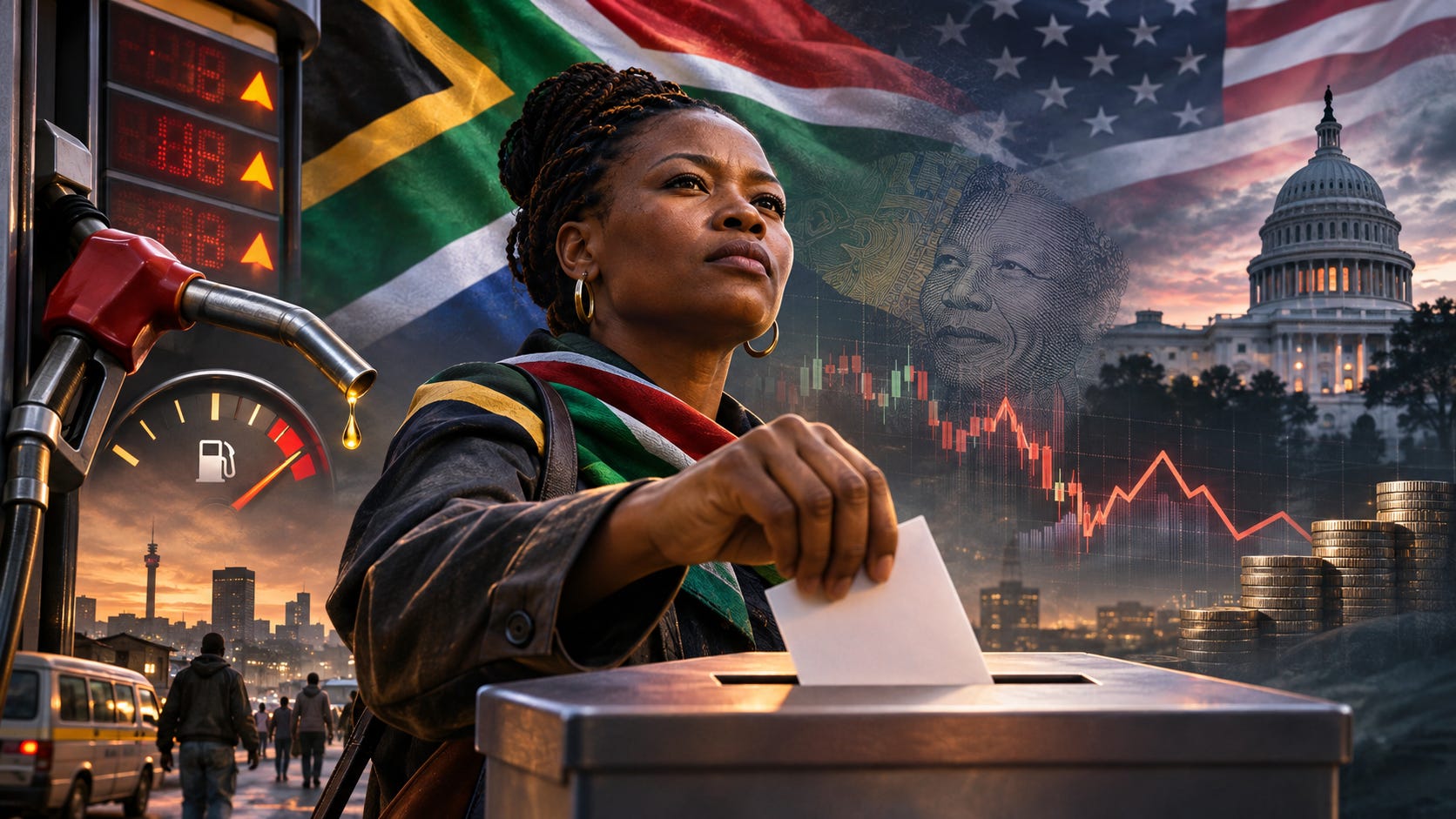
Every South African feels the strain at the fuel pump. Whenever global oil prices climb or the rand depreciates against the United States dollar, the ripple effect runs through the entire economy, elevating food prices, driving up transport costs, and eroding the purchasing power of everyday households. The assertion that America is “squeezing” South Africa via oil dynamics captures a deep-seated economic reality: global energy commerce is anchored in the US dollar, and when Pretoria chooses to antagonise Washington, it is the ordinary citizen who absorbs the financial fallout.
To understand this dynamic, one must look at how geopolitical alignment intersects with macroeconomics. Oil is priced internationally in dollars. South Africa does not produce sufficient domestic crude oil; it is an import-dependent price-taker. When international markets fluctuate, South Africa’s buffer depends entirely on the strength of its currency, foreign direct investment, and creditworthiness. Under the African National Congress (ANC), however, South Africa’s foreign policy has systematically drifted away from the world’s leading democracies towards an axis comprising Moscow, Beijing, and Tehran.
This diplomatic drift has had severe economic consequences. Investors perceive increased political risk when a government conducts joint military exercises with Russia, deepens diplomatic ties with Iran, and adopts stridently anti-Western rhetoric on international stages. This risk discount depresses the value of the rand. A weaker rand means that every barrel of imported oil costs more in local currency, directly exacerbating domestic fuel inflation. In essence, the “squeeze” is not necessarily a targeted embargo; rather, it is the predictable market reaction when a small, open economy alienates the very economic architecture upon which global trade relies.
For decades, the ANC has treated South Africa’s international relations as an arena for ideological nostalgia, prioritising historical Cold War loyalties over the material welfare of its citizens. While Washington remains a crucial export destination under trade frameworks such as the African Growth and Opportunity Act (AGOA), which supports thousands of South African jobs in manufacturing, agriculture, and the automotive sector, the ruling party behaves as though its future lies exclusively within the orbit of non-democratic regimes.
Aligning with Iran, Russia, and China offers South Africa little in the way of tangible consumer relief. Russia cannot provide the capital investment or technology transfers required to rebuild South Africa’s collapsing freight, water, and power infrastructure. China’s primary interest remains securing raw mineral commodities, often with adverse trade imbalances. Iran faces severe international sanctions that offer virtually no upside to South African industry. In contrast, the United States, the European Union, and their allies represent the primary sources of foreign direct investment, advanced technology, tourism, and high-value export markets.
To break out of this cycle of increasing prices and diplomatic isolation, the South African electorate must deliver an unmistakable signal at the ballot box. Voting against the ANC and backing centre-right, market-oriented political parties provides the only credible path towards recalibrating South Africa’s global standing.
Parties to the right of the ANC emphasise fiscal discipline, the rule of law, open-market competitiveness, and a pragmatic foreign policy rooted in national interest rather than outdated ideological commitments. A decisive pivot towards these parties would signal to Washington, London, and Brussels that South Africa is abandoning its adversarial posture and returning to the community of constitutional democracies.
A clear Western alignment directly benefits domestic stability. Restoring confidence among Western investors strengthens the rand, immediately muting the volatility of dollar-denominated oil imports. Securing South Africa’s position in Western trade pacts preserves manufacturing and employment while encouraging long-term capital inflows into critical infrastructure, from renewable energy grids to modern logistics.
Foreign policy is not an abstract exercise conducted in diplomatic corridors; it determines the price of bread, petrol, and electricity. For too long, the ANC’s flirtation with authoritarian states has imposed an invisible tax on working South Africans. By voting for parties that openly advocate alignment with the democratic West, South Africans can send an unequivocal message to Washington and the wider world: South Africa stands with open societies, free enterprise, and pragmatic international cooperation, leaving behind the costly alliances that have left the nation economically vulnerable.
Vote right.
Charl Heydenrych is a retired human resources practitioner and a libertarian.