

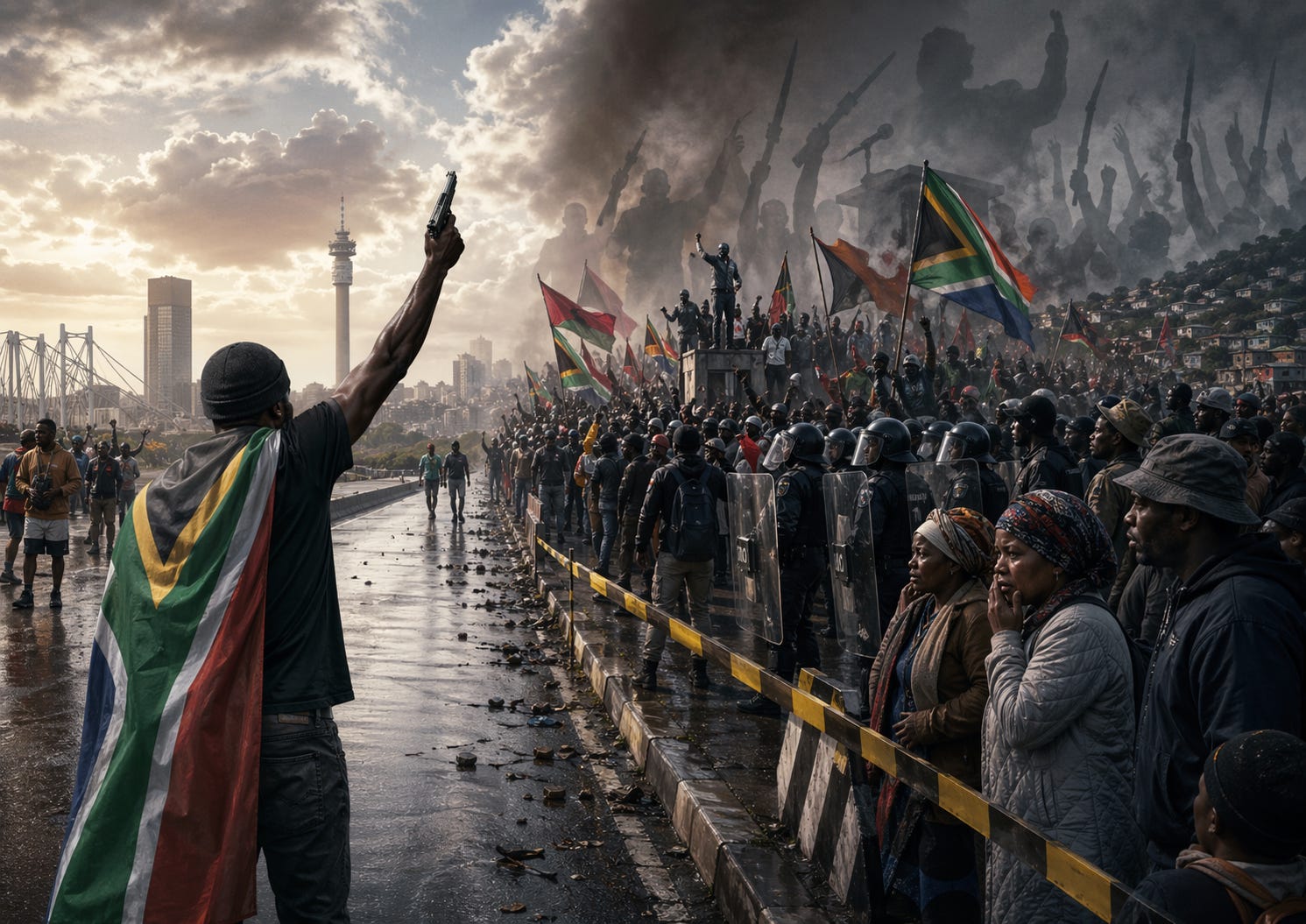
The tension between absolute liberty and public safety is often tested at the intersection of “risk” and “aggression”. To a libertarian, the line is usually drawn at the Non-Aggression Principle (NAP): the idea that force is only justified in response to the initiation of physical force. However, as critics rightly ask, must we wait for a body to hit the ground before a crime has occurred?
The Threshold of Aggression: Risk Versus Violation
In the libertarian view, the distinction between a “risky act” and “aggression” lies in the crossing of a physical boundary. Speeding on an empty road is a victimless act; reckless driving in heavy traffic, however, begins to edge into the territory of implied threat.
Aggression takes place the moment an individual’s actions infringe upon the private property or physical safety of another without their consent. In the case of discharging a firearm at a rally, the “victim” status is determined by the environment. If a person fires a gun in a crowded shopping mall, they are creating a direct, immediate threat to the lives of non-consenting bystanders. This is an act of aggression because the threat is credible and uninvited.
However, a political rally functions under a different set of ethical parameters: Implicit Consent.
The Rally and the “Consent of the Crowd”
The individuals attending an EFF rally are not accidental bystanders. They are voluntary participants in a highly choreographed, militant political subculture. By entering that space, there is a level of implicit consent to the environment – the noise, the rhetoric, and even the provocative displays of “revolutionary” theatre.
If Julius Malema fires a weapon into the air in that specific context, and the crowd remains, cheers, and engages, the libertarian argument is that no aggression has occurred because the participants have waived their right to claim “threatened” status. They have accepted the risk as part of the assembly. Just as a boxer consents to being hit in a ring, a rally-goer consents to the militant atmosphere of the event. To the libertarian, the state’s intervention here is paternalistic; it seeks to “protect” people who never asked for protection and who do not feel victimised.
Where Speech Becomes Action: “Kill the Boer”
The conversation shifts significantly when we move from the discharge of a weapon to the incitement of violence through song or speech, such as “Kill the Boer.” Libertarians are often absolutists regarding free speech, but even the most ardent defender of the NAP recognises that speech can bridge into incitement when it leads to a direct violation of rights.
If Malema utters these words, he is navigating the razor’s edge between “political hyperbole” and “solicitation of a crime.” To resolve this, we must look at the consequences.
If a member of that crowd, fuelled by the rhetoric of the rally, goes out and commits a murder against a white person within a reasonable timeframe (say, one year), the link between the speech and the aggression becomes a matter of ethical liability. In a libertarian framework, while the individual who pulled the trigger is primary, the person who incited the act bears a secondary responsibility for orchestrating a violation of the NAP.
A Proposed Standard for Prohibitive Speech
A consistent libertarian position could argue for a “consequence-based” restriction on speech. If it is found that Malema’s utterances are consistently followed by actual physical harm (the killing of “Boers” or farmers), then the state has a legitimate reason to treat those specific words as a direct threat.
Under this standard, if a causal link is established by a pattern of violence following his speeches, Malema should be prohibited from uttering “Kill the Boer.” This prohibition would not be a violation of free speech, but a recognition that the phrase has transitioned from “song” to “instruction for aggression.”
The weight of these words should be treated with the same social and legal gravity as uttering any other word or phrase recognised in South African law as an act of crimen injuria. “Kill the Boer” must be held to a standard of accountability when it translates into physical action.
Conclusion
Libertarianism is not a license for recklessness. While we must defend the right to own firearms and engage in provocative assembly without state interference, we must also demand absolute accountability for the results of those actions. We should not wait for someone to die to recognise a threat, but we must be careful not to criminalise “danger” itself.
The moment the rhetoric of the rally manifests as a corpse in the field, the speaker’s “right” to that rhetoric ends. Justice, in its truest sense, is the protection of the innocent from aggression – whether that aggression comes from a stray bullet or a command to kill.
Charl Heydenrych is a retired human resources practitioner and a libertarian.
Thanks for the article. While I agree with the principle behind "the consent of the crowd", I would just add that the person living across the street from the stadium did not consent to the military atmosphere at the rally by staying at his home, but the bullets may very well land on his head ...
A well argued article ...