


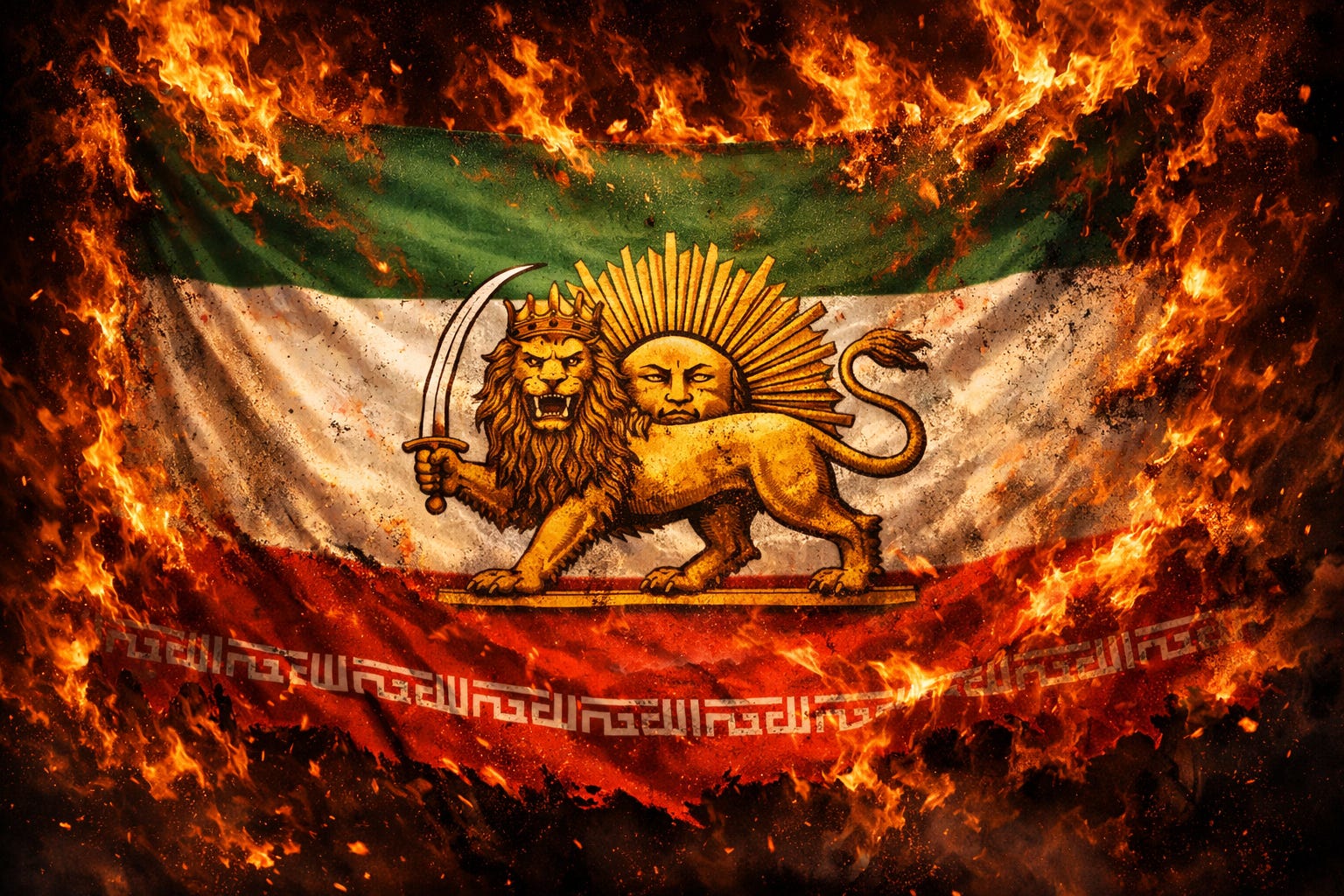
In these highly divided times, it’s hardly surprising that a (sort of) fresh new war in the Middle East would be controversial. Certainly not when Israel is involved. It’s still somehow disappointing, though, that reactions to the United States and Israel’s attack on the Islamic Republic of Iran have fallen so predictably along partisan lines (especially in the US) and are overwhelming framed not by nuance, and frequently not even by facts, but by trying to squeeze a complex situation into existing ideologies.
Responses to the war have often been more about one’s feelings towards Trump and/or Netanyahu than about the actual situation on the ground and the people who are most directly affected by the war. Not always, of course, as there are clearly many Trump supporters who are avidly against the war and there are those who would never dream of voting for either Trump or Netanyahu but see the war as a grim necessity. But the loudest voices come, as is so often the case, from those with nothing of value to say.
What is especially galling, though, isn’t so much the dunderheaded commentary on the war by those who have nothing more profound to add to the conversation than “Trump dumb” or “rah rah America”, but the way those who are most directly involved in the conflict are frequently gaslit, even negated, by those who view them as little more than props in their own ideological warfare.
Of course, it’s not that people who don’t live in the Middle East have no right to weigh in on the war, especially as it is affecting us all through its already seismic impact on the global economy. Rising gas and oil prices means a sharp increase in prices for everything else – and you can be sure that even when the former stabilise and decrease, the latter will stay right where they are.
But push comes to shove, it will always be those whose lives that are most directly impacted by the conflict that should have the last word.
Surprise Support
It’s perhaps instructive, then, that contrary to the overwhelming opposition to the war outside of the Middle East, there is a significant amount of support for it in the region itself. According to a recent report in the Times of Israel, a number of Gulf leaders – especially those from Bahrain, the UAE, Saudi Arabia and, amazingly, Qatar - have admitted that though they opposed the war at first and are still more than a little sore that it has been brought down onto their heads, they hope that Israel and the US continue fighting until the Islamic Republic can no longer be a threat to the region. This was further corroborated by the New York Times with its own report that the Saudi prince has been “pushing” Trump to continue the war and not make any deals with the regime.
In Israel, meanwhile, according to recent polls the support for the war rests somewhere along the lines of 78% support by Jewish Israelis – which is down from the 93% support of earlier polls when regime change seemed more likely, but is still nothing to be sneezed at. Even Netanyahu’s fiercest political opposition, those who hope to topple his government in the forthcoming elections, stand fully behind him in this instance.
It’s crucial to understand how significant this tacit or full-throated support of the war is for the Gulf States and for Israelis. They not only support the war, but believe it should continue until the Regime falls or is crippled beyond recognition, and this is despite the fact that it has played absolute havoc on their day-to-day lives.
Major civilian targets have been hit, primarily through Iranian drone strikes, in countries that are both more aligned with Israel (the UAE, Bahrain) and those that very much aren’t (Saudi Arabia, Qatar). Actual casualties have been relatively low, thank God, but it has been highly disruptive to the economies of these countries and the lives of their civilians. And yet, they – or at least their leaders – understand what the Islamic Republic is, why it’s such a threat, and why, for all that they attempted to appease the great beast over the years, it still attacked them when the chips were down.
In Israel, meanwhile, life has been completely upended. As anyone with friends or relatives who live there know, the day to day existence for most Israelis, be they Jewish or otherwise, consists of running to their shelters multiple times a day, home schooling their children and avoiding any sort of public gatherings as rockets, missiles and drones continue to rain down on them from both Iran and from the regime’s proxy in Lebanon, Hezbollah. Despite the Iron Dome defence system and the plethora of bomb shelters, dozens have been killed and billions of shekels in property damage have been incurred. Meanwhile, after two years of tirelessly fighting Hamas in Gaza, hundreds of thousands of reservists have been called up to directly fight the terrorists of Hezbollah in another complicated ground campaign in Lebanon.
And yet, 82% of Israelis, including at least a quarter of Israeli Arabs, support the war. Why? Because they too understand that this war has been going on for 47 years as the Jihadist Islamic Republic has brought its own country to ruin in its bloody-minded attempt to wipe Israel off the map – something that reached its unbearable apotheosis on 7 October 2023 and the months and years that followed. They understand that Jihadis with nuclear weapons are a threat unlike any other, they understand that there has never been a better time to take down the regime than now, and they understand that for Iranians to finally, finally be free, they need to be free of their monstrous “leaders”.
Those Most Affected
Which, of course, brings us to Iran itself. What do ordinary Iranians, who are clearly bearing the brunt of Israel and America’s attacks on the regime, feel about the war? Along with the all too tragic reality of the collateral damage of war, these attacks has caused the regime to be even worse, even more despotic than it already was. And this is a regime that murdered somewhere in the vicinity of 30,000 Iranian protesters over two days in January – and who have continued to execute anyone with even the vaguest whiff of dissension about them. How can they possibly support this war?
The answer, of course, is right there in the question. If anyone understands the evils of the Islamic Republic it’s the people of Iran, who have suffered for half a century under its theocratic boots. This is a people that have shown a bravery that most us could scant imagine in every act of defiance, no matter how small, to stand up for their own rights.
Now, is this opposition to the Islamic Republic represented by 90% of the Iranian people or 10%? Honestly, it’s hard to tell. Certainly, we know that the overwhelming majority of Iranians living outside Iran support the war and want the country to revert to what it was before 1979: one of the Middle East’s most progressive and secular nations. Within Iran, it’s obviously much harder to be fully certain of the feeling on the streets as the Islamic Republic has stifled dissent for its entire existence and controlled all forms of communications, especially during war time.
And yet, some communications do come through. So much so, in fact, that there have apparently been cases of Iranians risking their lives to provide intelligence to Israel and America through Persian social media. We know from the mass protests how unpopular the regime is. We know that the vast, vast majority of the Iranian people are not now and never were radical Islamists. And we know that no people on Earth would be at all okay with living under such draconian conditions for the better part of fifty years.
We also know, sadly, that they are under no illusion about what it will take to bring this regime down. That they will need all the help they can get. And even then it may not be enough.
Exploiting Their Pain
With all this in mind, I can hardly conceive of anything more cynical, more morally indefensible than the way “activists” outside the region, across the political spectrum, have used this mass suffering for their own purposes. Whether it’s Candace Owens “stanning” for the Islamic Republic in order to score points against the Jews and the “liberal elite”, or Javier Bardem getting up on stage at the Academy Awards to smugly declare “free Palestine” and “no to war” when he has never, not for a second, called out the Jihadists who murdered tens of thousands of their own people within the space of the day, there’s something extremely self-serving about some who speak loudest against the war.
Which, of course, isn’t to say that there aren’t plenty of reasons to be against the war – especially for American citizens who are footing the bill for the war, and the servicemen who are paying with their blood. There are certainly plenty of reasons to criticise the governments of both the US and Israel on any number of subjects. But the performative one-sidedness of people like Bardem and other clueless celebrities and activists is hypocritical at best, disgustingly duplicitous at worst.
Worse, though, is the shameless exploitation of what’s going on to score cheap, and frequently unearned, political points. Take, for example, the “news” doing the rounds that Israel was once again oppressing Palestinians and Arab Israelis by shutting down Al Aqsa mosque during the high holy days of Ramadan and Eid. This would indeed have been horrible if not for the fact that, you know, there is a war going on with warheads exploding across the entirety of Israel (and the Palestinian territories) that have caused all places of worship to be closed. And, as if to punctuate the point, there was literally a case of a missile hitting the courtyard that is shared by the holy sites of all three of the Abrahamic faiths in Jerusalem: the Wailing Wall, Al Aqsa and the Church of the Holy Sepulchre.
This total lack of context is fairly typical for those who would use any excuse to challenge Israel’s actions or very legitimacy, and you can be damn sure that these same “news sources” had nothing to say about the Islamic Republic nearly destroying Al Aqsa and killing Muslim worshippers.
Perhaps the most shameless display of hypocrisy, though, might just be those countless videos where we see clueless American or European “activists” shouting down actual Iranians that try to explain the truth about Iran, what the Islamic Republic is, why Iranians might support the war, and why liberal democracy might actually be a better system of government than Islamist theocracy. Whatever happened to listening to the “lived experience” of victims?
We all (including me, clearly) have our own axes to grind, but I have to ask these loud-mouthed hypocrites, those that mistake a catchy slogan for complex reality, is it really too much to do even the tiniest bit of research before opening your mouth and showing just how little you really know? Who knows, you may learn something.
Ilan Preskovsky is a Johannesburg-based freelance writer, who has covered everything from international politics to Jewish culture/ religion to film and TV reviews. His work has been featured online on the likes of News24, Popverse and BizNews, and in print in Business Day, Jewish Life Magazine and the Star, among others.
