


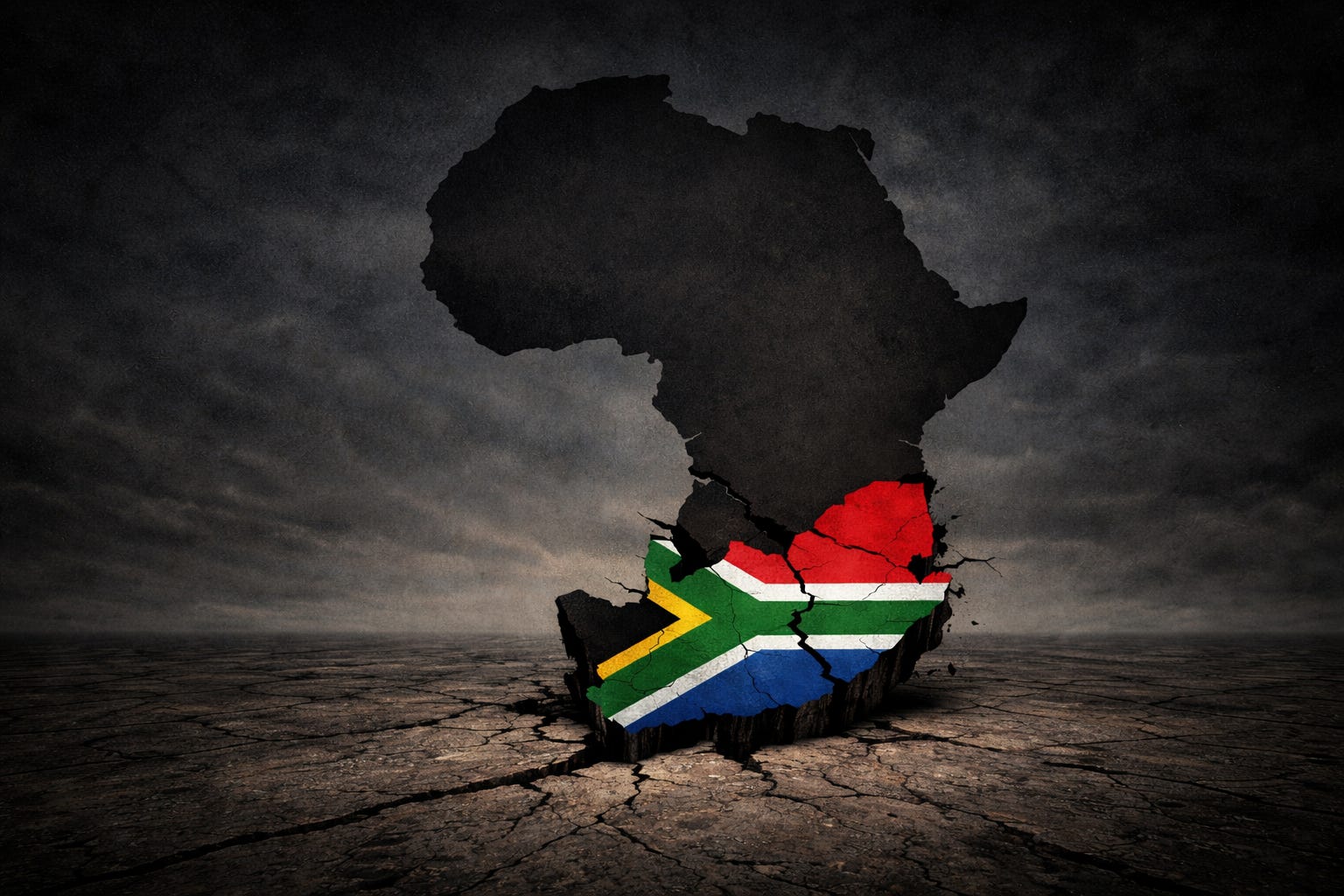
I may disagree with interventionists on the right, left and center, but that doesn’t make me a non-interventionist. There are many people who seem to have developed the stupidest form of nationalism, that imagines a country can be free and prosperous while closing its borders and ignoring everything that occurs outside of that country. This is what I call Wakanda nationalism because it only works in fiction. In the real world it only leads to disaster, as it did for China, Korea and Japan in the past.
What we learned from those examples is that countries that shut themselves off become poorer and less developed than everyone else. China shut itself off first through the Haijin policy, or sea bans, which restricted maritime trade, from about 1434 to 1567. Then again from 1757 to 1842 specifically to limit Western influence on China, there was even a missed opportunity in 1793 to peacefully open trade with the British and that refusal not only led to the opium wars that initiated China’s ‘century of humiliation’, it meant that China was ill-prepared to fight the war due to it being left behind the Western world who were industrial powers by that point.
Keep in mind that if you had described industrialisation to a well-informed medieval European, they would have most likely assumed that China would be the first country to industrialise. The Chinese were known for innovation and manufacturing going back to ancient times. This is why trade along the silk road was such a big deal and why the trade route was called by that name. They also produced other goods like tea and porcelain, invented gunpowder, paper etc.
The Chinese also had a large market and an abundance of capital (unfortunately the emperors squandered this). No one would have dreamed, certainly not the medieval British, that Britain would be the place where the first instance of industrialisation would occur. Yet that is exactly what happened because the British, whether through blind luck or something else, developed a society that had robust, decentralised institutions with trade links to Europe and the rest of the world.
As an island nation, the British understood that their very survival depended on trade. They also had a limited population, particularly after the bubonic plague, and knew they could not rely on a large internal market like the Chinese could. All of these and other factors contributed to Britain winning the industrialisation race while China and its East Asian neighbours shut themselves off from the world and were left behind while the West, they used to think of as primitive, surpassed them and eventually defeated them.
Both the Chinese and Japanese were forcibly opened by Western powers, China by Britain in 1842 and Japan by the USA in 1853. Japan, to its credit, quickly learned its lesson and applied them via the Meiji restoration in 1868 (a mere 15 years later, this shows how adaptable Japan and its institutions were/are). China would take longer to adapt and did not really learn the lesson until the 1978 reforms under Deng Xiaoping.
Korea on the other hand, was not opened by a Western power, it was opened and then colonised by Japan. Things would go downhill from there and it was not until the end of the Second World War and the establishment of South Korea that any part of Korea would start to gain prosperity and some freedom. It would take the military dictatorship from 1961 to 1979 for South Koreans to see rapid gains in prosperity. A central pillar of the dictatorship’s policies was making South Korea a competitive exporter (partly through allowing markets to set wages) instead of the failed policy of import substitution (a policy that modern South Africa still relies on despite an abundant of evidence of its failure).
Similarly, Sub-Saharan Africa was a late bloomer in terms of development. While global trade links did exist from East Africa to the East and via the Sahara, this was nothing compared to the trade links enjoyed by the Mediterranean civilisations. This is why so little was known of Africa as long ago as the 19th century, with the African interior being referred to as the dark continent.
All of this to make the point that the Wakanda strategy of isolation cannot create prosperity, closing borders makes you worse off culturally and economically. This cartoonish form of nationalism is gaining traction in South Africa. Europeans might have an objection to Middle Eastern and African immigrants, but in general they understand the importance of at least being connected to your neighbours, South Africans seem to live under the delusion that we can be safe and prosperous while cutting all ties with our neighbours.
Firstly, our best and most natural allies are on the African continent. These people have a similar culture as us, with most South Africans having originated in West Central Africa and made their way East and South during the Bantu migration more than 1500 years ago. Sub-Saharan Africa is also where the African Christian states are concentrated. The religion that dominates SA is also dominant across Sub-Saharan Africa.
In fact, from South Africa in the South to Kenya, Uganda, the Central African Republic and Cameroon in the North, there is a remarkable similarity in language, genetics and culture. This is also the part of Africa where the African part of the British Empire was located and today there is a clear division in African politics between the Northern (largely) Francophone countries and the Southern (largely) Anglophone countries, which further reinforced the similarities in terms of the institutions inherited from the British empire.
Another point is that African borders are arbitrary. Why do we have so many Basotho in the Free state and other parts of SA bordering Lesotho? Why are there so many Swazi people in Mpumalanga? Why are there so many Batswana in the Northwest province instead of Botswana? Why are there so many Ndebele, Venda and Tsonga people in Zimbabwe?
These are all peoples who make up South Africa; there’s even a sizable Xhosa population in Zimbabwe. In Mozambique, Tsonga people make up over 20% of the population. And these peoples all derive from or are related in some significant ways to other people in Sub-Saharan Africa. There is no cultural reason to close our borders, which is not to say we must not control the border.
We have also seen how isolationism can lead to a country falling from a position of being relatively more advanced than its neighbours and trade partners, to falling far behind to the point that the country becomes easy to conquer. Our closest relationships should naturally be formed with our Sub-Saharan African neighbours. This includes cultural, diplomatic, trade, security and other relationships.
This cannot happen when there is this rhetoric that demonises other Africans and implies they are all criminals. I have even seen some truly heinous statements referring to Africans as dirty. Clearly this is meant to dehumanise the people who are closest to us. I will always find it interesting that by demonising these people in this way, given how close they are to black South Africans, the ones doing the demonising essentially agree with those who are racist against black South Africans.
You may see yourself as better than the Zimbabwean, but you are clearly not so much better that you have nothing at all in common.
On a more pragmatic level, the closest people we can trade with or cooperate on security or other matters, are our African neighbours. In fact, trade with Africa does much of the work of reducing our trade deficit. Our trade with the West and with China either widens our overall deficit or only reduces it through the export of raw commodities for the most part, Africa buys our processed goods and services.
When it comes to security, our non-ocean border is our northern border with other African countries. With good diplomacy, we can work to make sure to secure ourselves against any security threat from the North. This could include military bases in some of these countries, radar, satellite ground stations, missile batteries (particularly important on the East and West coasts of Africa) etc to ensure any invasion attempt against us can be deterred either before the enemy lands on the continent, or far from our borders.
I can honestly say there is no hope of South Africa resolving its many problems on its own as many like to say (the idea that before unity all African countries must resolve their individual problems). The right kind of cooperation is how we resolve our shared problems and build shared prosperity and security. There is simply no historical precedent of a country going it alone or ignoring its neighbours and succeeding.
This means we also must take responsibility for stabilising Africa. The quicker our neighbours stabilise and live in peace with the rule of law, the quicker we can trade freely. Stable neighbours also reduce immigration to South Africa, but this is far from being the most important benefit.
When we speak of Africans derisively, looking down on them because they are poorer than us, we better hope that fortunes will never be reversed as they were in the case of China and the West. Africans will remember South African insults, even when future South Africans have forgotten them and need Africa’s cooperation to succeed. We have an opportunity now to build good relations with our neighbours from a position of strength; it might not last long.
Mpiyakhe Dhlamini is a libertarian, writer, programmer and an Associate of the Free Market Foundation.

Your knowledge and insight on historical matters is impressive and VERY important for understanding much of our current discourse. And your point about open and free trade is extremely valid and important. But you have conflated issues of tribalism and xenophobia and immigration controls into the mix and lost the train of the argument. They are all important issues and must be factored into African discourse and problem solving. I think I big driver behind the xenophobia is the issue of theft (of livelihoods and goods) and criminality by immigrants who are often here under nefarious purposes and not to contribute to and assimilate into South African society. Many are here trying to siphon grant money from our taxpayers. And I dont think its resulting in a call for not trading with our partners. In fact I dont believe that economic growth and trade is a priority AT ALL to the encumbent rulers... and that is the real problem.