


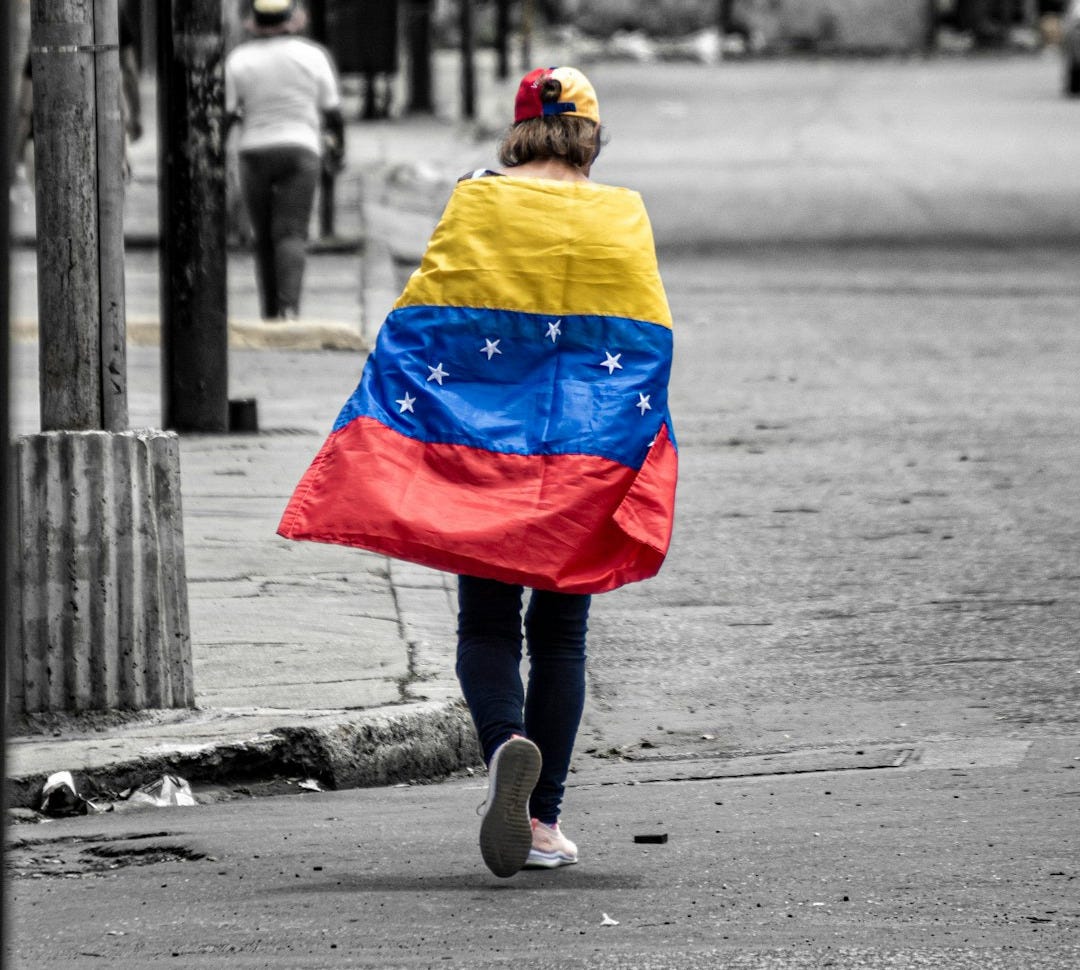
On Saturday 3 January 2026, United States law-enforcement and military personnel forcibly abducted Venezuelan President Nicolás Maduro and his wife from Venezuela and took them to the United States.
On Monday 5 January, the two captives were brought before the Manhattan federal district court to answer charges of importing cocaine into the United States or of manufacturing and distributing cocaine knowing or reasonably believing that it would be imported into the United States.
The Maduros pleaded not guilty to the charges. Mr Maduro said they had been unlawfully kidnapped from their home. Presiding Judge Alvin Hellerstein has adjourned the trial until 17 March.
A person’s forcible abduction from abroad doesn’t prevent a court from trying him
In the United States, the courts treat the manner in which a criminal defendant has been brought before the court as irrelevant to the courts’ competence to try that defendant.
Thus in 1886, after a US agent had forcibly detained one Frederick Ker in Lima in Peru and taken him against his will to Illinois where he was tried and convicted for embezzlement, the US Supreme Court unanimously held that there was no reason to differ from authoritative prior English and US court rulings which held that forcibly detaining a suspect in another country and abducting him to the United States to be tried in a court in the United States “presents no valid objection to his trial in such court”.
And in 1992, after US agents had forcibly kidnapped medical doctor Humberto Álvarez-Machaín in Guadalajara in Mexico and abducted him to Texas where he was indicted for participating in the kidnap and murder of a US Drug Enforcement Administration special operative and a Mexican pilot, the US Supreme Court confirmed that the rule in the 1886 Ker case applied and therefore the fact of Álvarez-Machaín’s forcible abduction did not prohibit his trial in a court in the United States for violations of the criminal laws of the United States.
In the case of both abductions, that of Ker from Peru in 1886 and that of Álvarez-Machaín from Mexico in 1992, an Extradition Treaty was in force between the US and the other country concerned. But the US Supreme Court held in both cases that neither the existence of the Extradition Treaty nor its procedures governing extraditions from the one country to the other restricted the application of the principle that the accused’s forcible abduction from the other country did not prohibit his trial in a court in the United States for violations of the criminal laws of the United States.
And, while the accused’s forcible abduction from the other country may have violated general principles of the international law of nations, the US Supreme Court ruled in both the 1886 Ker and 1992 Álvarez-Machaín cases that this was a matter for the executive government and did not prevent the accused’s trial in a United States court for violations of the criminal laws of the United States.
But three of the nine Supreme Court justices in the 1992 Álvarez-Machaín case gave a dissenting opinion. They stressed that the extradition treaty with Mexico was comprehensive and that it was shocking that a party to the treaty might believe that it had secretly reserved the right to make seizures of citizens in the other party’s territory. It was a breach of international law for a country to send its agents to the territory of another country to apprehend persons accused of having committed a crime. The accused might have participated in an especially brutal murder of an American law enforcement agent, but that did not justify disregarding the Rule of Law, which the Supreme Court has a duty to uphold. The dissenters quoted Thomas Paine’s warning, “He that would make his own liberty secure must guard even his enemy from oppression; for if he violates this duty he establishes a precedent that will reach to himself.”
These three dissenting justices in the 1992 Álvarez-Machaín US Supreme Court case cited with approval a ruling of 1991 by the South African Supreme Court’s Appellate Division.
South African Appellate Division’s 1991 ruling
In 1991 the South African Appellate Division ruled that a South African court had no jurisdiction to try one Ebrahim Ismail Ebrahim, a member of the African National Congress (ANC)’s armed wing uMkhonto we Sizwe who had left South Africa in 1980 but in 1986 was forcibly abducted from Swaziland (as it then was) by South African agents and brought to South Africa to stand trial for treason.
It could be contended that this 1991 South African Appellate Division judgment was more political than legal, in that the President de Klerk government had unbanned the ANC a year earlier. But the court’s judgment was well-reasoned. It comprehensively addressed relevant Roman and Roman-Dutch legal sources, concluded that they gave a court no jurisdiction to try anyone forcibly abducted from another country, and found that this was still the South African common law. The court declared that previous judgments which held that an accused’s abduction from a foreign state did not oust a court’s jurisdiction were wrongly decided.
English law was like US law but no longer
English law was to the same effect as the American until not long ago. The US Supreme Court in the 1886 Ker judgment had relied on, among others, an 1829 English case.
In this 1829 English case, the Lord Chief Justice had granted a warrant for the arrest of one Susannah Scott so that she might appear and plead to an indictment for perjury. The police officer to whom the warrant was directed arrested Scott in Brussels and brought her to England. A writ of habeas corpus was issued calling on the police to produce Scott to the court with a view to its determining whether her arrest was lawful. On the return day of the writ, the Lord Chief Justice ruled that, if a person charged with a crime is in this country, the court cannot inquire into how she came to be there.
And more recently, in 1949 a British army deserter, one Elliott, was arrested in Belgium by British officers accompanied by Belgian police officers. He was brought to the United Kingdom where he was charged with desertion and detained in Colchester barracks. He successfully applied for a writ of habeas corpus and on its return day argued that his arrest was illegal because the British authorities had had no power to arrest him in Belgium. Lord Goddard CJ followed the 1829 Susannah Scott ruling and confirmed that the circumstances in which the accused may have been arrested in Belgium and brought to the United Kingdom were no concern of the court, which had no power to go into the question.
But in 1993 a panel of House of Lords appeal judges upset that line of precedent and ruled that a trial court has the power to inquire into the circumstances by which a person has been brought within its jurisdiction. If the court is satisfied that extradition procedures were disregarded, it may stay the prosecution and order the release of the accused.
The House of Lords appeal judges cited the 1991 South African Ebrahim judgment approvingly.
Eichmann
Where extradition procedures are indeed disregarded, it may not follow that a court will invariably order the release of an abducted person. The following earlier case is relevant.
In 1956 in Buenos Aires in Argentina the daughter of a Jewish man who had left Germany in 1938 started dating a young man whose father appeared to be probably senior Holocaust organiser and fugitive Adolf Eichmann. The Jewish man alerted the prosecutor-general of Hesse state in West Germany. The Hesse prosecutor-general, apparently mistrusting the German police and fearing they might tip off Eichmann, first informed the Israeli intelligence agency Mossad.
The Hesse prosecutor-general then requested the German government to extradite Eichmann, but that government declined to do so. Argentina at the time had a reported history of rejecting requests to extradite Nazi criminals In March 1960 Mossad’s director dispatched to Buenos Aires an Israeli operative who after investigation confirmed Eichmann’s identity. Instead of lodging a likely futile request for extradition, the Israeli Prime Minister decided that Eichmann should be captured and brought to Israel for trial.
In May 1960, Israeli intelligence agents forcibly abducted Eichmann from Argentina to Israel. He was tried for crimes against humanity under Israeli law, among other offences, by a special tribunal of the Jerusalem District Court. The tribunal ruled that the circumstances of Eichmann’s capture did not affect the legality of his trial. All this is described in sources cited in Wikipedia’s article about him.
US courts could follow the 1991 South African Ebrahim ruling
As mentioned, the Maduros have pleaded not guilty in the Manhattan federal district court to the charges against them and Mr Maduro said they had been unlawfully kidnapped, and Judge Hellerstein has adjourned the trial to 17 March.
Judge Hellerstein will be bound by the rule in the US Supreme Court’s 1886 Ker and 1992 Álvarez-Machaín decisions, that forcible abduction of an accused person from another country does not prohibit his trial in a court in the United States for violations of the criminal laws of the United States.
The Maduros could then appeal to the Supreme Court and request it to overturn its Ker and Álvarez-Machaín decisions. But the Supreme Court might decline to do so and could rule that those decisions still hold.
Or the Supreme Court might on appeal by the Maduros adopt the 1993 English court’s principle, that a trial court may indeed inquire into the circumstances by which a person has been brought within its jurisdiction and may order the release of the accused if satisfied that extradition procedures were disregarded. The Supreme Court could then remit the case back to the Manhattan district court for the latter court to make that enquiry and to make a possible order of release.
Or the Supreme Court could adopt wholesale the rule in the 1991 judgment by the South African Supreme Court’s Appellate Division, that a court has no jurisdiction to try anyone forcibly abducted from another country.
Head of State’s immunity from prosecution
When the trial resumes on 17 March, Maduro’s lawyers will probably also argue that he is immune from prosecution because he is a Head of State. Maduro held onto the presidency after disputed elections in 2018 and 2024.
Independent exit polls after the 2024 election show that the opposition candidate had reportedly won two-thirds of the votes. More than 50 countries, including ten or more in Latin America, refused to recognise Maduro’s 2024 re-election.
But in international practice, any such lack of legitimacy in his election does not prejudice his entitlement as Head of State to immunity from prosecution in the US. What matters under international law is which entity exercises effective control over the territory. Maduro’s government exercised effective control over Venezuela until his abduction, and he would accordingly be entitled to immunity from prosecution in the US.
In the European Journal of International Law blog in January, two academics write that one might question whether international law is too protective of tyrants, but nonetheless, under the dominant view of the contemporary law of immunities, Maduro would seem entitled to Head of State immunity before US courts. If head-of-state immunity could be overcome by mere unilateral non-recognition, then in practice there is no such immunity at all.
So, when the case resumes on 17 March, Judge Hellerstein is likely on balance to hold, apart from whether a court can try someone abducted from a foreign country, that Maduro is entitled to Head of State immunity and order his release.
Gary Moore, a practising attorney for 30 years, is a Senior Consultant at the Free Market Foundation.
