

Written By: Tonderai Godknows Mapfumo
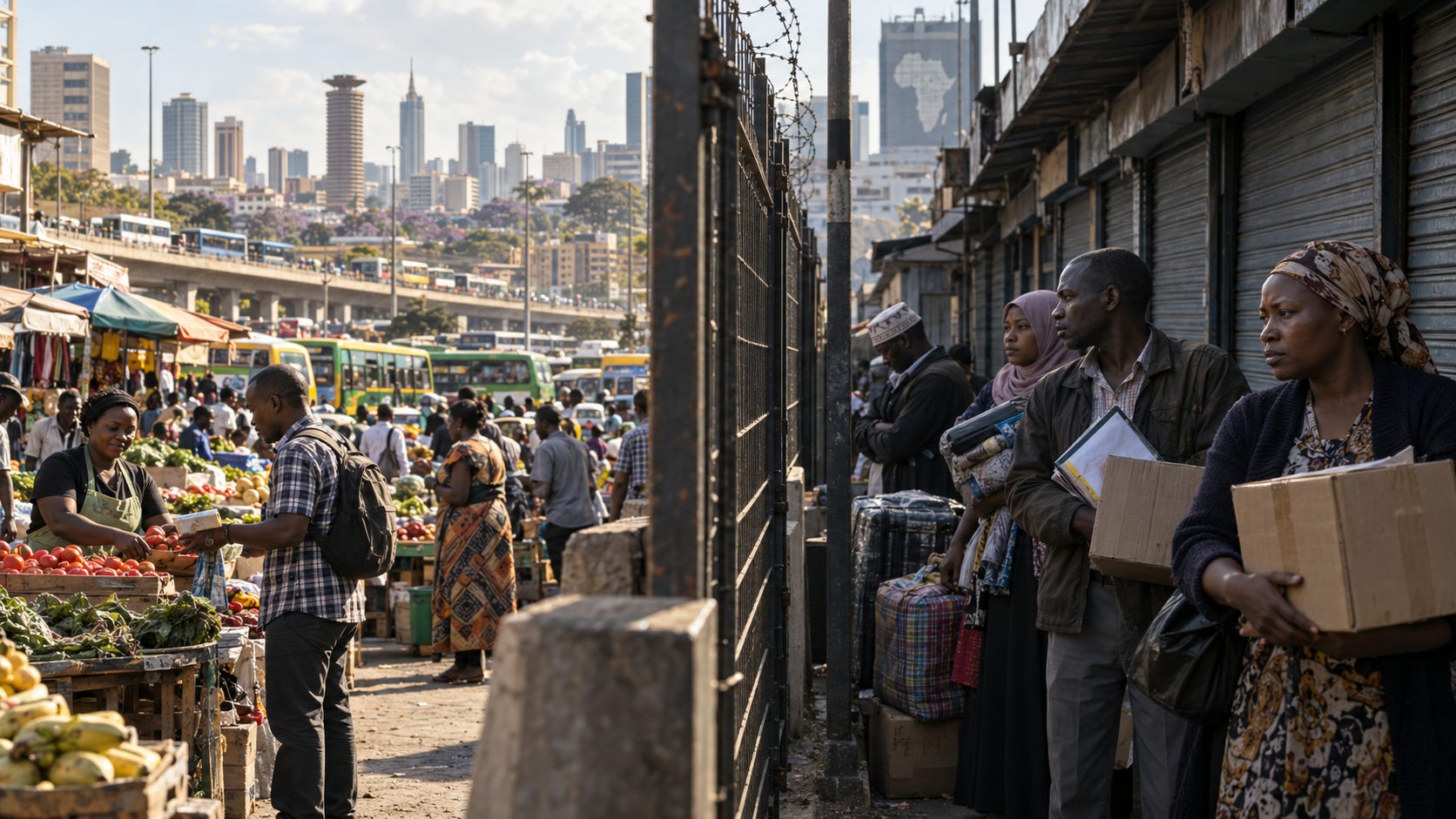
On September 2, 2026, President William Ruto directed authorities to shut down small businesses operated by foreign nationals, giving them until September 7 to cease operations. The directive, framed as a measure to reserve hawking and small-scale retail for Kenyan citizens, triggered a wave of panic among migrant communities, particularly Burundians, and drew sharp criticism from human rights organisations, regional bodies, and political opponents. While the government later extended the deadline to 90 days to allow for regularisation of immigration status, the damage to Kenya’s reputation as a champion of regional integration was already done. The crackdown represents a fundamental betrayal of three core principles that Kenya has historically claimed to uphold: Pan-Africanism, Ubuntu, and liberal democratic values.
The policy and its justification
President Ruto’s directive was announced during a meeting with micro, small, and medium enterprise traders at State House, Nairobi. He argued that Kenya welcomes foreign investment, but that foreigners should not compete with citizens in businesses requiring little capital. “We have made efforts to improve the economy; we have not improved investor confidence for hawkers to come to Kenya,” Ruto stated. The government linked the crackdown to the Local Content Bill, 2025, which proposes that foreign companies employ Kenyans as at least 80% of their workforce and source at least 60% of specified goods and services locally.
The policy was presented as a necessary measure to protect vulnerable Kenyan traders at the bottom of the economic pyramid. However, the speed and severity of its implementation – with a mere five-day deadline – suggested a political calculation rather than a carefully considered economic strategy. With a presidential election due in 2027 and youth unemployment remaining a pressing concern, the crackdown offered the administration a simple, populist message: protect Kenyan traders from foreign competition.
The betrayal of Pan-Africanism
Pan-Africanism - the ideological foundation upon which the Organisation of African Unity (now the African Union) was built - envisions a continent united by shared history, culture, and destiny. Kwame Nkrumah, one of its foremost architects, viewed total continental integration as Africa’s only shield against external exploitation. Kenya’s crackdown directly undermines this vision by reinforcing the very colonial borders that Pan-Africanism sought to dissolve.
Former Chief Justice David Maraga captured this contradiction with precision: “We cannot profess to lead a regional Jumuiya while simultaneously subverting its foundational frameworks”. Maraga argued that Kenya could not credibly champion Pan-African initiatives while undertaking measures that undermine its principles. The directive stands in direct conflict with the East African Community’s Common Market Protocol, which guarantees the free movement of persons, labour, goods, and services among member states. Article 13 of the Protocol explicitly guarantees citizens of partner states the right to establish businesses, provide services, and pursue economic activities in any member state under non-discriminatory conditions.
The timing Is particularly ironic given Kenya’s recent role as a champion of African economic integration. President Ruto himself has been a vocal advocate for de-dollarisation of intra-African trade and has preached borderless trade at continental summits. As one opinion piece noted, “To crack down on foreigners doing small business in Kenya is not just ill-conceived. It is anti-globalisation, anti-Pan-African, and anti-Kenya”.
The violation of Ubuntu
Ubuntu, the Southern African philosophy meaning “I am because we are,” emphasises shared humanity and mutual interdependence. It is a worldview that prioritises community, solidarity, and collective well-being over narrow self-interest. President Ruto’s directive, by targeting foreign traders – many of whom have lived in Kenya for years, married Kenyan citizens, and raised families – stands in direct opposition to this philosophy.
The human cost of the crackdown has been devastating. Hundreds of Burundian nationals queued outside their embassy in Nairobi for emergency travel documents, fearing both deportation and reprisal. A Burundian man who has a child with a Kenyan woman told the BBC: “When I heard the announcement, it was very painful because when I go, I’m forced to leave my family… and I love my family”. Kenyan Grace Wamaitha, whose Burundian husband left the day after the directive, described her desperation: “Now he’s gone, who will help me pay school fees? I don’t know what to do. Let them come back”.
The Network Against Human Trafficking and Smuggling of Migrants warned that the blanket closure directive risks pushing already vulnerable populations – including the approximately 857,000 registered refugees and asylum seekers in Kenya – out of legitimate livelihoods and into informal, unregulated, and unsafe alternatives. This is not the brotherhood that Julius Nyerere envisioned when he articulated Ujamaa as the foundation of East African unity.
The erosion of liberal principles
From a liberal perspective, the crackdown raises serious concerns about the rule of law, due process, and the protection of minority rights. The directive was issued as an executive order rather than through legislative channels, bypassing parliamentary scrutiny and public participation. Former Chief Justice Maraga noted that “a directive read at State House does not amend the Constitution”.
The enforcement of the directive led to reports of intimidation, profiling, extortion, and unlawful harassment of foreign nationals, particularly targeting traders from East African partner states like Burundi and the Democratic Republic of Congo. Amnesty Kenya warned that “sweeping rhetoric against foreign traders breeds vigilantism, hate speech, and xenophobic discrimination against non-nationals, threatening civil peace”. The ITUC-Africa described the situation as an “early-warning alert,” cautioning that “political statements that distinguish Africans as unwanted ‘foreigners,’ particularly in circumstances of unemployment and economic hardship, can quickly legitimise discrimination, profiling, harassment and ultimately violence”.
The crackdown also undermines Kenya’s obligations under the 1951 Refugee Convention, the 1969 OAU Refugee Convention, and Kenya’s Refugees Act, 2021, which legally safeguard refugees’ rights to gainful self-employment. As the Police Reforms Working Group Kenya noted, executing arbitrary administrative directives without clear statutory backing “lacks statutory foundation, threatens regional unity, and undermines binding human rights standards”.
The scapegoat strategy
Beneath the policy justifications lies a troubling political reality. As Professor Gitile Naituli observed, “The foreign traders are convenient political targets precisely because they possess little power. When governments become unpopular, scapegoating offers an attractive political shortcut: identify a visible minority, associate it with the economic suffering of citizens and suggest that removing that minority will restore prosperity”.
This analysis is supported by the data. Foreign nationals accounted for only about 1.6 per cent of the workforce in foreign-invested enterprises in 2024. As Maraga pointedly noted: “Close every foreign-run stall tomorrow and the price of maize does not move by one shilling”. The real drivers of Kenya’s economic challenges – corruption, unpredictable taxation, limited access to capital, and structural unemployment – remain unaddressed. As the ITUC-Africa General Secretary argued, “Economic hardship must not be explained through nationality, nor should migrant workers and African traders become convenient scapegoats for structural problems of unemployment, inequality, informality and inadequate social protection”.
A way forward
Kenya has a legitimate interest in regulating trade and protecting its citizens’ economic opportunities. The grievances of Kenyan small businesses facing taxation, licensing costs, and stiff competition are real. However, the response must be proportionate, lawful, and consistent with Kenya’s regional and international obligations.
A more constructive approach would involve strengthening the capacity of the Kenya Revenue Authority to target tax cheats rather than conducting blanket raids on vulnerable traders. It would mean fast-tracking the regularisation of undocumented migrants while ensuring that those with valid permits can continue to operate without harassment. It would require genuine consultation with EAC partner states to develop harmonised frameworks for informal cross-border trade, building on initiatives like the Simplified Border Trade Regime between Ethiopia and Kenya.
Ultimately, the crisis reveals a bitter truth: when local economies falter, Pan-African solidarity is often the first casualty. By trading his long-term legacy as a continental unifier for short-term political survival, President Ruto has demonstrated that the dream of a borderless Africa remains subordinate to the immediate, transactional demands of domestic politics. As the ITUC-Africa warned, “Policies and rhetoric that encourage Africans to see one another primarily as economic threats run contrary to that Pan-African ambition”. Kenya – and Africa – deserve better.
Tonderai Godknows Mapfumo is the Research and Advocacy Officer for COMALISO (Coalition for Market and Liberal Solutions) in Zimbabwe and an Associate of the Free Market Foundation.