


Written By: Vivienne Vermaak
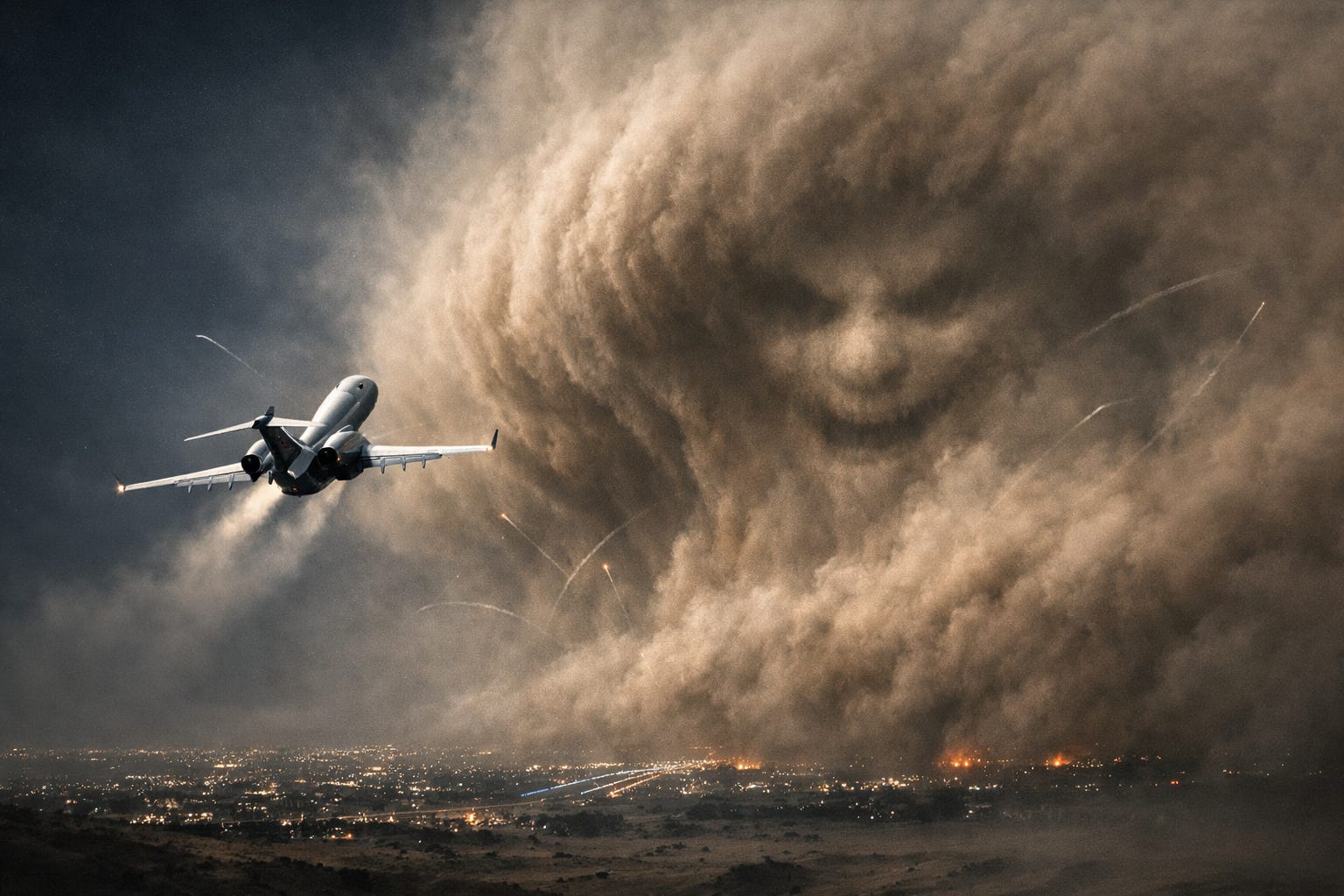
There is a famous scene in the movie, ‘The Mummy’, where the baddy Imhotep, played by Arnold Vosloo, causes a massive sandstorm. Our heroes must outfly it in a small plane but seem likely to fail and be engulfed by evil. At the last minute, however, they soar out to safety and the crowd cheers.
We lived through a similar scene in my family recently when a loved one had to suddenly return from Saudi Arabia after bombs fell in Riyadh. They had been working on a large multinational project, involving Egyptians, Pakistanis, South Africans, and Australians. The moment the US embassy was struck, they insisted on an aeroplane ticket home.
After a harrowing ordeal in which the taxi driver was late, missed the airport exit a few times, and they missed the initial flight, they got on a plane to Addis Ababa – just before the airport in Riyadh closed, like many others in the Middle East. She was the only South African to have asked for a first flight out. The others hesitated, hedging their bets that the dust would settle quickly. Their hope was that their contract and jobs would continue, as they needed the money. Jobs are scarce, and “It’s still safer here than in some areas in South Africa,” some argued.
You are safe
Do you stay or do you go? It is a difficult decision to make, as the most potent weapon in a war is fear. Panic causes chaos, hotheaded leaders, and death. South Africa’s Department of International Relations and Cooperation (DIRCO) has condemned the US-Israeli attacks on Iran and Iran’s attacks on its neighbours as unlawful, but political and legal judgment is easier to make in the media than providing actual evacuation assistance in situ.
Many South Africans are scouring Facebook groups and trading insider information on the ground before making their next move. “You are safe,” according to a briefing by a war journalist, as shared with a South African in Qatar. He comes from frontline experience in the Ukraine war and says that civilians’ priority should be their mental health.
“You are very safe,’ he is quoted as saying. “Your main goal right now should be doing whatever makes you feel best. If that’s going to the mall, go. Malls are actually among the safest places you can be, with massive concrete structures. If you’d rather shelter in place, that’s fine too.”
He says that this type of war is a negotiation via scare tactics. Targets are likely to be military or strategic and likely won’t include shopping malls or residential areas. He goes on by explaining that flying out of places like Qatar does not make sense from a safety standpoint. “Staying in Qatar is considerably safer than trying to fly out right now. Air defence systems have difficulty distinguishing commercial aircraft from enemy planes, which makes flights out of Qatar, Dubai or Abu Dhabi riskier than staying put, but it is still very safe, but less safe than staying. At this stage, leaving simply doesn’t add up if safety is your concern.”
DIRCO is advising South Africans stranded in Israel along a similar line, encouraging them to consider land exits, rather than flying, especially as Ben Gurion airport has been shut down.
While war is terrifying, it is often limited to specific areas where photographers, media, and attention gather. I recall Dawie Roodt sharing images and videos of Moscow in Russia during the height of the Ukrainian conflict, and it looked like a fully functioning place, with people going about their normal business. Ukraine, after 4 years of war, still has electricity. Airports tend to be targeted because of their visibility and potential to disrupt and spread terror. It would take many months of sustained attack before the infrastructure collapses.
It is unclear how long the situation in the Middle East will escalate. Trump has said it will be over in 4 to 5 weeks. Experts and pundits shouting at each other on podcasts, Facebook, and WhatsApp predict it will take years at best or lead to World War 3 and total obliteration of the entire planet. Our ground source suggests the following in the meantime: “Iranian capacity is declining. Within 7–10 days, their missile launcher capacity should drop significantly. Air defence (Qatar has multiple systems; THAAD is not even being used yet) is holding strong, unlikely to run out of interceptors, though they may start letting missiles through that are projected to land in unpopulated areas. The 10-day mark matters. Within about 10 days, we should have a much clearer picture of the overall trajectory, which is very likely to improve and lessen.” Or not.
At the end of the famous sandstorm scene in The Mummy, whilst we are cheering for our heroes, the pilot loses control, and the little plane crashes into a sand dune. Imhotep smiles and plots his next move. In our real-life movie, depending on which character you are rooting for, it is not clear who the baddies and goodies are, but the choice to fly an aeroplane into a shitstorm will always be a difficult one. Good luck to all attempting to get out or have colleagues, friends or family there.
Know your sounds
If you are stuck in the area, here are some tips from our war correspondent on how to listen to a war: “Attack patterns will most likely shift. Expect quieter days and louder nights. Strikes are concentrating into volleys between roughly 2–4 AM rather than coming sporadically. Know your sounds. Drones sound like lawnmowers. Loud bangs are intercepts – that’s your air defence working. Rumbling or rolling sounds are impacts. You may also start hearing machine gun fire soon, that’s the next phase of drone defence, not an attack. Iran can sustain drone attacks for much longer than missiles, as their missile launchpads are getting destroyed at a rapid pace, and drones are much less dangerous.
Drones are scarier than they are dangerous. They’re primarily a psychological warfare tool. The actual risk of going outside and living normally right now is roughly comparable to driving 80 miles in a car. But right now, the best thing you can do is stay calm, stay informed, and take care of yourself.”
On one of the South African Facebook groups, an Iranian door and window supplier calmly posted an advert, with the Iranian flag flying proudly as backdrop: “In support of our fellow citizens, the Oryx team are happy to attend to glass repairs, and wherever possible, we will repair at no cost.”
Or you can do what my family did and get on the first plane out of there with a photo caption: “I came, I saw, I ran.”
Vivienne Vermaak is an award-winning journalist and public speaker. Vivienne is a Senior Associate of The Free Market Foundation. She writes in her personal capacity.
Hopefully this will be the last time this happens ... If the religio-tyrants are finally removed by the Persian and fellow Iranian citizens who are being suffocated by them, the country may start breathing again and the world may see a renaissance of their rich culture ...