


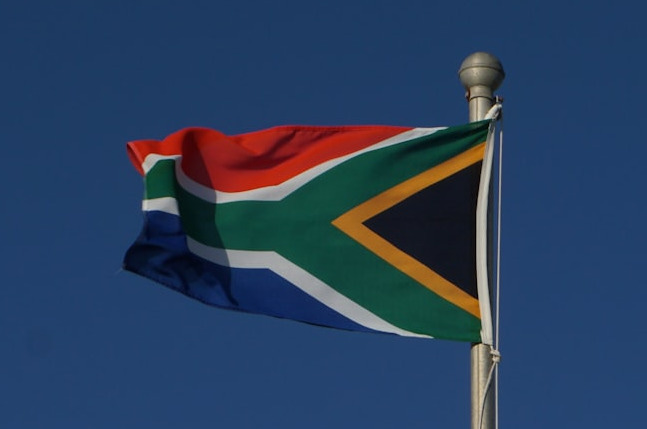
After more than three decades of democracy, it may be time for the fervent proponents of ‘rainbowism’ to reassess the political viability of their brand of civic nationalism in South Africa, which they continue to present as the only morally legitimate political project.
If one is being honest, many people who are called South Africans do not identify with this kind of nationalism that anchors a common South African identity in civil and democratic values rather than race or ethnicity. There is generally no strong sense of national consciousness in the country (read ‘South Africanness’) beyond symbolic moments such as a Springbok World Cup victory, the invocation of the late President Nelson Mandela as a unifying figure, or the observance of a national holiday.
In many ways, identity politics remains deeply embedded in the country’s political life.
In their defence, the proponents can acknowledge the presently low appeal of rainbowism, yet still argue that a rapid improvement in the material conditions of most poor black South Africans could foster greater belief in it by allowing them to experience something resembling the rainbowist ideal, which partly entails living in diverse communities, working in cosmopolitan environments, and sending their children to integrated schools.
While this argument sounds plausible on the surface, it rests on very precarious ground. Given South Africa’s current policy trajectory and likely prospects into the foreseeable future, upward mobility for most South Africans and the social integration that might accompany it are slim. So even if one accepts the argument, much of the country will likely remain segregated along racial lines for some time, while only a tiny sliver of the population continues to experience something resembling the ideal.
But even if material conditions improve dramatically and more people climb the socio-economic ladder, there is no guarantee that social integration will translate into a national consciousness that transcends race and ethnicity. The fact that there are already affluent people in the higher echelons of society who do not subscribe to the idea that a common civic identity should supersede other identities proves this. There is no linear relationship between upward mobility and a greater belief in the rainbowist project.
This naturally means that rainbowism as a political project requires interrogation on a fundamental level because society is not progressing towards the rainbowist ideal and identity politics is not merely a response to corruption and state failure.
The rainbowist project
There can be little doubt that rainbowism is a noble and well-intentioned normative political project in the context of a political history marked by racial injustice and the struggle for humanity, redress and inclusion. It represents the deployment of the Constitution and its values – such as non-racialism, equality, diversity, and human dignity – as a foundation for forging a common civic identity that can lead to the realisation of a just, harmonious, and united society.
However, despite the moral hegemony it continues to enjoy, it bears noting that rainbowism is but one constitutional interpretation of what post-Apartheid politics should look like and how the South African polity ought to be organised. It isn’t and should not be treated as the only morally legitimate blueprint of politics and nation-building.
Rainbowism seeks to cultivate a civic-national consciousness in which the people called South Africans can collaborate across social divides, with the aim of securing political power and using a centralised state to advance the ideal of a just, unified, and civically nationalist society. Because of this commitment, rainbowists are generally critical of political organisations they perceive to be organised along racial or ethnic lines. In this view, these organisations are either attempts to entrench ‘white privilege’ or efforts to promote ‘narrow’ black nationalism – both of which are seen as obstacles to building a civically nationalist society.
In practice, perhaps the clearest example of an organisation presiding over a state advancing the rainbowist project was the ANC, particularly in the early years of democracy. The ANC is, of course, fundamentally a socialist, African nationalist organisation pursuing its National Democratic Revolution (NDR), but its example in the early years provides useful insight into some of the practical implications of rainbowism.
To be clear, this is not to suggest that the ANC has ever been truly committed to rainbowism as a political project. Rather, the balance of political and institutional forces in those years constrained it to a posture that, in practice, resembled aspects of rainbowism, even as its deeper ideological outlook remained rooted in the NDR.
Equality before the law?
A key aspect of rainbowism is its conception of the law as an instrument for shaping certain social outcomes. What rainbowists share with the ANC is the view that race-conscious law is necessary in the quest for a truly just society in which race ceases to be a point of reference. This informed their support for the ANC’s retention of the race-classification system and the construction of a legal-political framework that underpins a range of racial laws and policies that systematically privilege black South Africans.
Herein lies an obvious contradiction within rainbowism: the championing of non-racialism as both an organising principle and a social ideal, while simultaneously relying on racial classification to achieve that end. An easy retort can be that this critique reflects a form of race blindness that is aimed at preserving the status quo. Yet rejecting racialism is not the same as denying history or the imperative of justice. The law exists not as a tool of social engineering, but to enshrine equality before all. Justice can still be pursued through a variety of means without diverting it from its true purpose.
The reliance on race-conscious law exposes a fault line in the attempt to cultivate a common civic identity. People naturally differ in their conception of the law and the role of the state in society. These differences cannot simply be reduced to racism or a resistance to ‘transformation’. They reveal a deeper, substantive divergence in understanding what civic nationalism should mean in practice and how it should be pursued.
Uniformity in diversity
In theory, rainbowism tolerates diversity, as reflected in its mantra of ‘unity in diversity’. The idea is that this common civic identity can coexist with people’s other identities. Yet, under the ANC, practice has often contradicted this ideal. There has been an elite-driven effort to impose the civic identity as the primary marker of identification, effectively subordinating other identities. Any strong identification outside this framework has been consistently vilified and framed as regressive or divisive.
In this regard, the state has been deployed to enforce a certain uniformity and to demonise political projects that organise themselves along racial or ethnic lines. Whether in schools, popular media, or the broader public sphere, it has been used to promote the idea that religious adherence to a common civic identity is the highest expression of responsible citizenship and the only legitimate basis of political belonging.
Unity in diversity has increasingly come to mean not diverse individuals bound together by a universal framework of individual rights, but diversity only permitted within the parameters of a civic orthodoxy that must ultimately take precedence over all other forms of belonging. In short, demographic diversity, but ideological conformity.
Unfortunately, after more than three decades, top-down enforcement of rainbowist nationalism has produced little in the way of national consciousness, and generalised poverty and destitution are not the main explanations for this. Beyond a tiny elite in society, rainbowism remains a largely distant project that has little resonance with many South Africans.
It not only lacks resonance with alternative interpretations of the Constitution that champion genuine non-racialism or embody true unity in diversity, but it also fails to resonate with more radical political projects that reject the Constitution and openly advocate racial dominance and the suppression of individual liberty. Crucially, this lack of resonance is not primarily the result of socio-economic factors. There are far deeper reasons why a country in which so many forms of identity politics are competing has not developed a common civic identity.
The question of identity is another major fault line, and it exposes the limitations of a political project that seeks to impose and suppress pluralism rather than grappling with society as it is and hoping that it can organically evolve over time towards a civic identity or something that resembles it.
Centralisation and its risks
Here, the point raised earlier about centralisation needs to be expanded as another fault line. While the ANC’s capture of the state as part of its NDR project is no accident, it highlights an inherent flaw in centralisation. Centralisation, no matter how well-intentioned, opens significant risks that raise serious questions for individual liberty and the broader autonomy of society.
The fact that some rainbowists tolerate centralised education, laws that threaten property rights, and the erosion of heritage in the name of diversity does not mitigate these risks. On the contrary, it illustrates how a seemingly benign project can inadvertently steer society towards coercion and the suppression of individual freedoms.
Rethinking politics and nation-building
At this point, it may be tempting to simplistically dismiss this intervention as a rejection of cross-community collaboration and as an endorsement of dangerous forms of identity politics that risk serious political degeneration. But it is neither.
Rejecting cross-community collaboration in principle is very different from rejecting a specific project that demands it in service of ideological imperatives that do not genuinely align with the values of non-racialism, equality, and human dignity. Similarly, to say that even dangerous forms of identity politics should not be engineered away but rather engaged with critically is very different from endorsing them.
Rainbowism, while noble and well-intentioned, has revealed serious problems that can no longer be ignored, wished away, or treated as obstacles that can disappear with material improvements. At the very least, it needs to consider readjusting itself, or risk remaining a marginal project with only momentary symbolic resonance. Insisting on it as a moral dogma is not only unhelpful but also stifling to genuine dialogue that could open the door to alternative approaches to politics and nation-building.
The conversation about alternatives falls outside the scope of this piece, but it is necessary considering rainbowism’s limitations and the search for politically sustainable solutions in a diverse society.
As one political analyst has aptly observed, the ANC’s gradual withdrawal from politics has created conditions that allow for greater experimentation politically. This is the gap that should be seized to begin imagining the future without imprisoning the mind in a project that should be dethroned from its position of unquestioned authority.
Ayanda Sakhile Zulu holds a BSocSci in Political Studies from the University of Pretoria and is a Policy Officer at the Free Market Foundation.

This is a good diagnosis, I mostly agree except for the part where the rainbowist project is noble and well-intentioned. Those descriptions only apply to the liberals who fell for it, it was designed to outflank liberals by presenting a form of state power that seemingly centers liberal values while in reality being used to undermine them. That does not happen by accident.
You can also look at the fact that an attempt to introduce rainbowism was not unique to us, the US civil rights movement led to the same outcome. Even the arguments are the same, there they also argue that you only need to make sure to improve the material conditions of black Americans to make the project work. I see Malcolm X and the Nation of Islam as providing an alternative that was more in line with historical America civic nationalism, and they are paid lip service while rainbowism is pursued.
There must be a reason why you would deploy a similar ideology to two different societies? The US and South Africa share two things that made them susceptible to rainbowism: racial diversity, and a classically liberal culture. Before we became a "rainbow nation", either Afrikaner nationalism or classical liberalism was going to win. If you didn't want either, you had to deploy something like rainbowism.
I really question some of the changes that the SA liberal movement underwent during apartheid. Why was the qualified franchise abandoned? Yes, that was in line with Western countries evolution on the subject, but SA liberalism was always its own thing, our liberals didn't mind bucking global liberal trends.
Great article as always Mageba. I think you teased a follow up on alternatives at the end there, I am looking forward to it.